
What Should a Tradie Website Include?
The pages, sections and details that make a trade website useful - and what visitors are actually looking for before they call you.

A tradie website has a narrow job: convince someone who already has a problem that you handle that problem, that you cover their suburb, and that you're worth calling. Every section below exists to answer one of those three questions.
1. A homepage that says what you do and where
Someone should be able to land on your homepage and know within a couple of seconds: the trade, the area, and how to get in touch. That means the headline says something like "Licensed electrician serving the northern suburbs" - not "Welcome to our website".
Below that, a short summary of your main services, a few photos, a couple of reviews and a clear way to contact you. The homepage doesn't need to explain everything; it needs to point people to the right page quickly.
2. A separate page for each main service
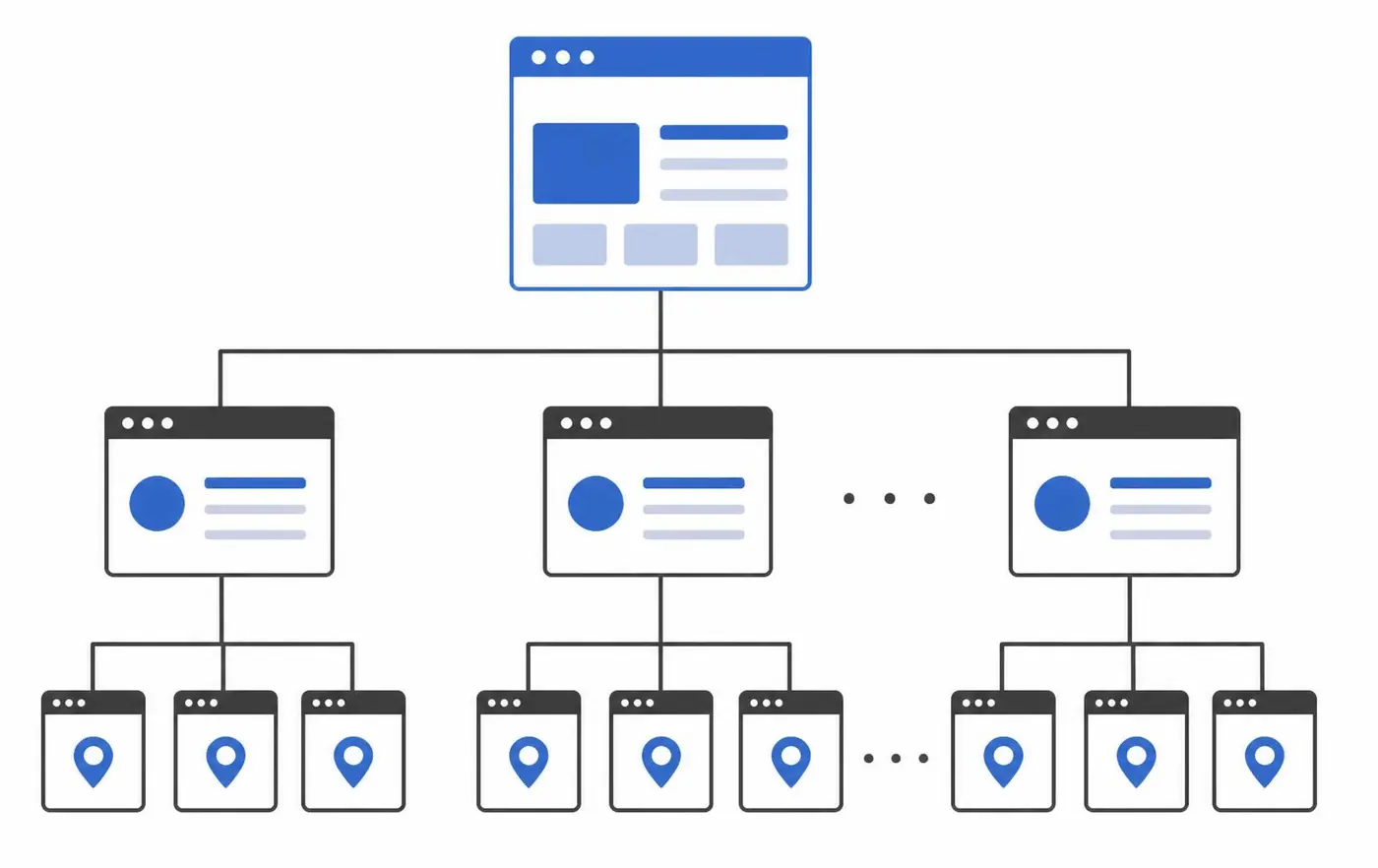
This is the single biggest structural difference between a website that earns enquiries and one that just exists. If somebody searches for a specific job, they want a page about that job - not a services page with a one-line mention of it.
Each service page should cover what the job involves, what's included, common signs someone needs it, roughly what to expect, and a call to action. More on this in should every service have its own page.
3. Service areas people recognise
"South East Queensland" is too vague to reassure anyone. List the suburbs and areas you actually cover, and be honest about travel. People are checking one thing: do you come here?
4. Real photos of your work
Stock photography of a smiling model holding a spanner convinces nobody. Photos from your own jobs - the finished deck, the tidy switchboard, the new hot water unit - do the selling for you. A dozen decent phone photos beat an empty gallery every time.
Take the shot straight, in daylight, with the mess cleared. Before-and-after pairs are especially strong.
5. Reviews and trust signals
Genuine reviews carry more weight than anything you write about yourself. Pull a handful from your Google Business Profile onto the site, keep the wording exactly as the customer wrote it, and don't invent any. Alongside reviews, useful trust signals include years in business, insurance, licence numbers, warranties you actually offer, and the brands or products you work with.
6. An about section with a face
People hire people. A short paragraph about who you are, how long you've been doing it, and how you work - plus a photo - does more than three paragraphs of corporate filler.
7. Licences and credentials where they apply
Electrical, plumbing and gas work are licensed trades, and customers do check. Show your licence number where relevant and keep it current. Don't claim accreditations you don't hold.
8. Contact details that are never more than a tap away
Your phone number belongs in the header on every page, as a tappable link on mobile. Add your service email, your hours, and whether you take after-hours calls. If you don't take after-hours work, say so - it saves everyone time.
9. A short enquiry form
Name, phone, suburb, and what the job is. That's usually enough. Every extra required field costs you enquiries, and nobody is filling in a fifteen-field form while standing in a wet laundry.
10. Mobile usability
Most trade enquiries start on a phone. Text should be readable without zooming, buttons should be thumb-sized, and the page should load quickly on mobile data. If you only test your site on a desktop, you're testing the wrong version.
11. Clear calls to action
Every page should end with an obvious next step: call, or send an enquiry. Not "learn more". Not a link back to the homepage.
12. SEO foundations
Proper page titles and descriptions, one clear heading per page, sensible URLs, internal links between related pages, fast loading and an XML sitemap. None of that guarantees rankings, but without it you're making Google's job harder for no reason. See what SEO actually is for the plain-English version.
Quick checklist before you sign off a tradie website
- Can a stranger tell what you do and where in three seconds?
- Does each main service have its own page?
- Are your suburbs listed?
- Are there at least six real photos of your work?
- Are there genuine reviews on the page?
- Is your phone number tappable on every page?
- Is the enquiry form four or five fields, not fifteen?
- Does every page finish with a clear next step?
- Does it all look right on your own phone?
If you'd rather not assemble all that yourself, this is exactly what I build on the Tradie Website Design package - up to 10 pages, written around your services, with a one-off payment of $99 to get started, then $45/week once your website goes live.
Need a Better Website for Your Business?
Professional websites built by Mike - $99 to get started, then 5 weeks free after launch to see how it performs before $45/week, including hosting, your domain, SEO foundations and a monthly update.
See what your website can do. Nothing more to pay until it has been live for 5 weeks.
Common questions
- How many pages does a tradie website need?
- Usually a homepage, an about page, a contact page and one page per main service - so most trade businesses land somewhere between six and twelve. Here's how to work out your number.
- Do I need a blog on a tradie website?
- Not necessarily. A blog only helps if you'll actually keep it useful. Well-written service pages usually do more for a trade business than an abandoned blog.
- Should I put prices on my website?
- If you have fixed call-out fees or standard pricing, showing it filters out the wrong enquiries. If every job is different, explain how you quote instead of leaving people guessing.

Written by Mike - Web Guy Mike
I build and look after websites for Australian tradies and small service businesses. Every site is built by me - no outsourcing, no account managers. More about Mike.