
Google Ads vs Facebook Ads: Where Should a Trade Business Spend?
Intent-based search ads versus scroll-based social ads - the honest comparison for tradies and local service businesses, including where each one loses money.
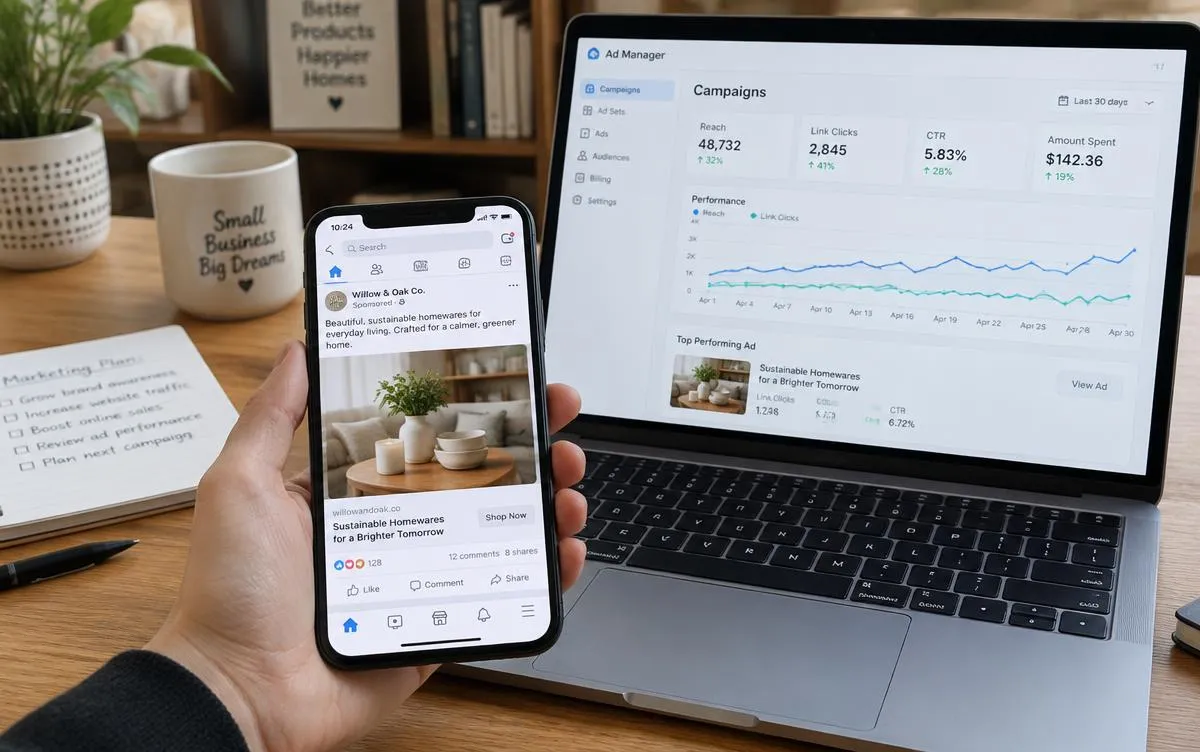
They share an "Ads" label but do completely different jobs. Google Ads puts you in front of someone actively searching for what you do. Facebook Ads interrupts someone scrolling their feed and talks them into something they weren't looking for. For a plumber and a furniture maker, the right answer is opposite.
The core difference: intent
Someone typing "emergency plumber Oxenford" has a burst pipe and a credit card. Someone seeing your landscaping post between baby photos and memes might get around to a backyard project next spring. Neither platform is "better" - they serve different moments. But the moment matters: catching existing demand is cheaper per job than manufacturing it.
| Google Ads | Facebook / Meta Ads | |
|---|---|---|
| The searcher's state | Actively looking for you | Scrolling, not looking |
| Best for | Emergency & repair work | Visual & considered work |
| Click cost (AU trades) | $5-$20+ | $1-$5 |
| Speed to results | Days | Weeks of testing |
| Skill needed | High - waste is fast | High - creative and targeting |
| Stops when you stop paying | Immediately | Immediately |
| Typical failure mode | Broad keywords, no negative list | Boosting posts to everyone |
Where each one burns money
Google Ads burns money when campaigns run on broad match with no negative keywords ("plumber" catching "plumbing apprenticeship"), when ads point at a slow homepage instead of the matching service, and when nobody tracks which clicks became jobs.
Facebook burns money when a post is "boosted" to a broad audience, when the ad sells the service instead of showing the work, and when it targets people who can't book you - the radius setting deserves more care than it usually gets.
The order I'd spend
- Website that converts. Ads pointing at a site that doesn't convert are a taxi to a closed shop. Fix conversion first.
- Free channels. Your Google Business Profile and reviews win jobs for nothing - set the profile up properly before spending a cent.
- SEO. Rankings are the only channel that keeps working when the budget stops. It's slow, but it's why my customers pay $45/week for a site that ranks rather than renting leads forever - hipages vs your own website runs that maths.
- Then ads, small and measured. Start at $10-20 a day, kill anything that can't show a cost per job inside a month. Google Ads for tradies covers the search side in detail, and website vs Facebook page explains why the website has to come first either way.
Build the Asset First
A fast, conversion-first website that ranks on its own - $99 to get started, 14 days free once live, then $45/week. No lock-in. Then every dollar you ever spend on ads works harder.
$99 to get started. First 14 days free once live, then $45/week.
Common questions
- How much should a small trade business spend on ads?
- Start where one job comfortably pays for a month of clicks. For most trades that's $300-600 a month to start. If a job is worth $800 and you land one from $400 of ads, scale carefully; if two months pass with no tracked jobs, stop and fix the website.
- Are Facebook leads worse than Google leads?
- They're colder - more tyre-kickers, more 'just getting quotes'. Facebook leads cost less but convert at a lower rate. Judge both on cost per booked job, never cost per lead.
- Can I run both platforms at once?
- Yes, and they can complement each other - Google catches today's emergency, Facebook keeps you in mind for the planned reno. But run each with its own budget and its own tracking, or you'll never know which one earned the job.

Written by Mike - Web Guy Mike
I build and look after websites for Australian tradies and small service businesses. Every site is built by me - no outsourcing, no account managers. More about Mike.