
Local SEO for Tradies: How to Show Up in Your Own Suburbs
How to get found in the suburbs you actually work in - the map results, suburb pages and the order to fix things.
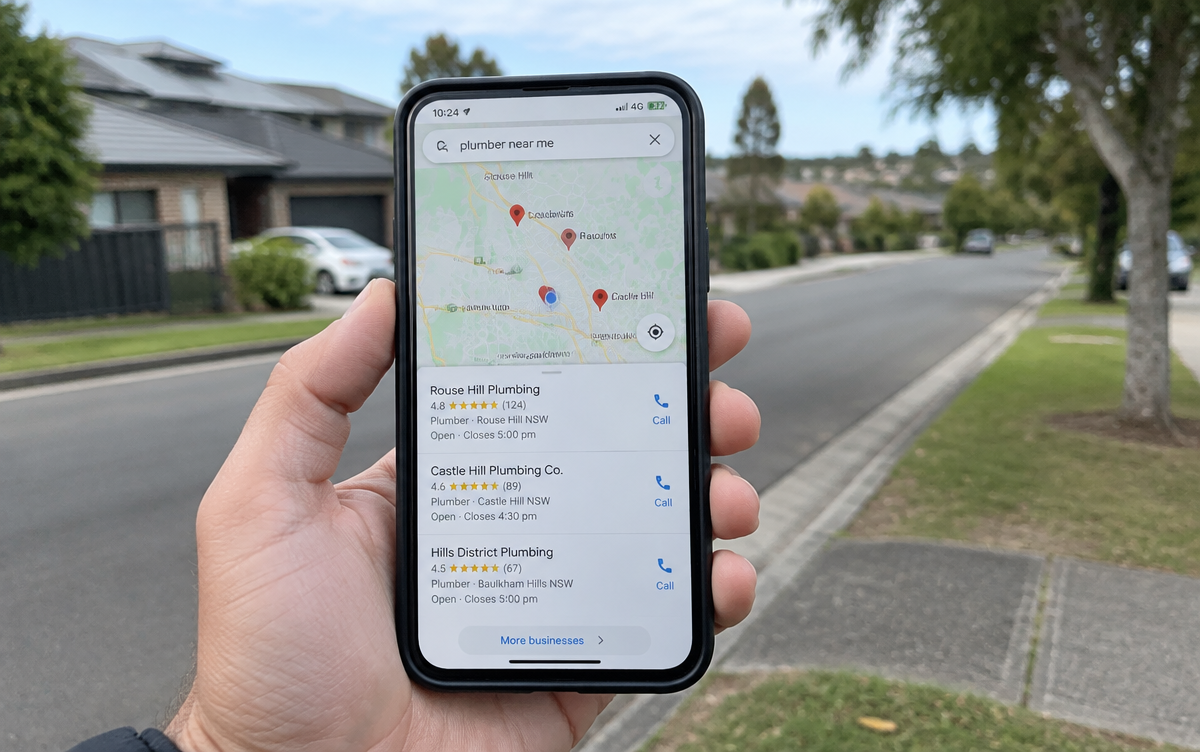
Local SEO is a narrower job than SEO generally. You're not trying to rank across Australia - you're trying to be one of the three businesses that shows up when someone in the suburb you're driving through searches for your trade.
The two results you're competing for
When someone searches "electrician Southport", Google shows two different things, and they are ranked by different signals.
| Map results (the three listings) | Normal blue links | |
|---|---|---|
| What ranks | Your Google Business Profile | Your website pages |
| Biggest factors | Proximity, reviews, categories, activity | Page content, relevance, links |
| Where most clicks go | Phone calls and directions | Reading before enquiring |
| How to improve | Complete the profile, collect reviews | Build proper service and suburb pages |
Most tradies only work on one of these. The businesses that dominate a suburb work on both, because each one feeds the other - Google trusts a profile more when there's a website behind it saying the same things.
Step 1: Get your Google Business Profile right
This is the single biggest lever in local search, and it's free. The essentials:
- Exact business name - no keyword stuffing like "Bob's Plumbing Gold Coast Blocked Drains". Google penalises it.
- Right primary category - "Plumber", not "Contractor". Add secondary categories for the services you really do.
- Service area, not just an address - list the suburbs you actually work in, not half the state.
- Real photos, added regularly - job photos, your ute, your team. Activity is a signal.
- Services listed individually - each one written out, with a sentence each.
There's a full walkthrough in how to set up a Google Business Profile the right way, including the mistakes that quietly hold listings back.
Step 2: Give each suburb a real page
A suburb page only works if it's genuinely about that suburb - the types of homes, the age of the plumbing or wiring, jobs you've actually done nearby, how long it takes you to get there. Twenty pages with the suburb name swapped out will do nothing, and can hurt.
Start with the five to eight suburbs you most want work in, write them properly, then add more over time. More detail in do location pages actually help with SEO and service pages vs location pages.
Step 3: Reviews, steadily
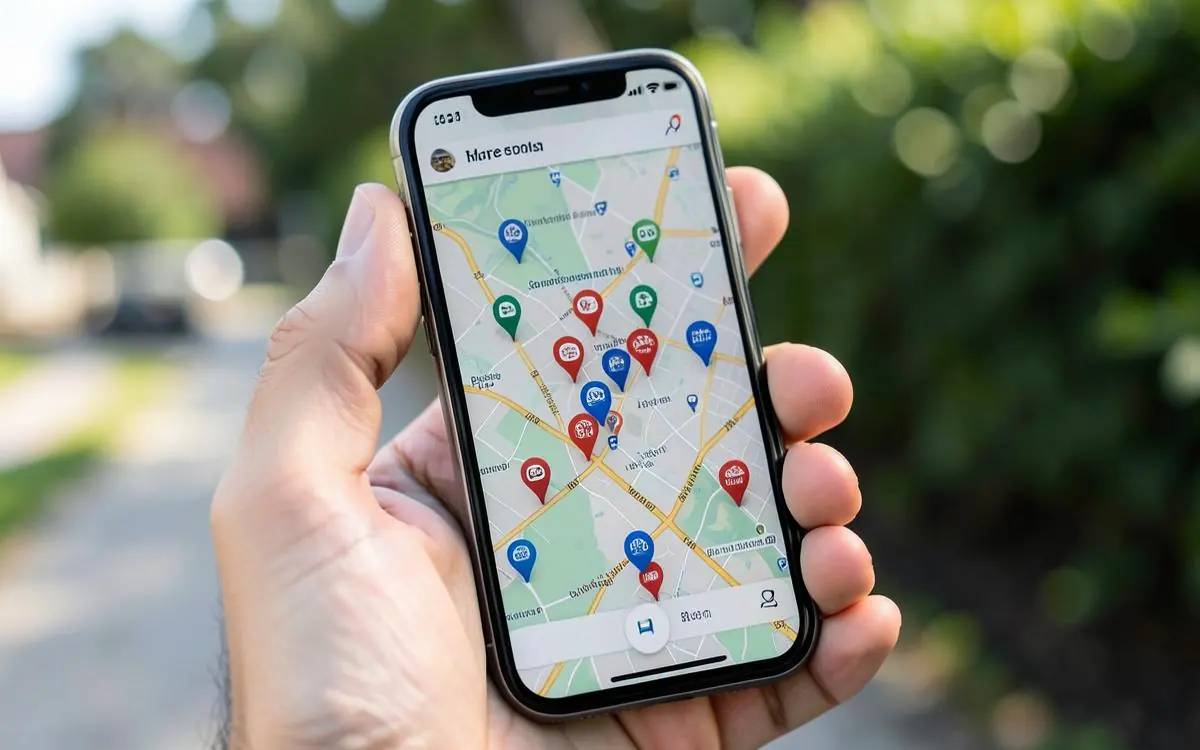
Reviews are the clearest difference between the listings that rank in the map results and the ones that don't. Not a hundred in one week - a handful every month, replied to, ideally mentioning the job and the suburb in the customer's own words. Never write them yourself.
The practical system for asking is in Google reviews for tradies.
Step 4: Consistency everywhere
Your business name, phone number and service area should read identically on your website, your Google profile, your Facebook page and any directories you're listed in. Mismatched details - an old mobile number, a previous business name - make Google less confident about who and where you are.
Step 5: Basics on the website itself
- Phone number in the header of every page, tappable on a phone.
- Suburbs you service written in plain text, not buried in an image.
- Fast loading - most local searches happen on mobile data.
- One clear page per service, not everything crammed onto the home page.
- Local business schema so Google can read your details cleanly.
Local SEO order of work
- Claim and complete your Google Business Profile properly.
- Set your service area to the suburbs you genuinely cover.
- Build one solid page per service you want more of.
- Write real pages for your top five to eight suburbs.
- Set up a habit of asking every happy customer for a review.
- Make your name, number and area identical everywhere online.
- Add photos to your profile every few weeks.
- Check monthly which suburbs and searches are actually bringing calls.
What takes longest
Map results can move within weeks once a profile is properly set up and reviews start coming in. Ranking for competitive suburb searches in the normal results takes longer - typically a few months of having the right pages in place. See how long SEO takes, and if nothing's showing at all, why your website isn't showing up on Google.
For the broader picture beyond local search, the SEO for tradies guide covers the rest.
Want to Improve Your Google Visibility?
SEO varies enormously depending on your website, your market and who you're competing against, so there's no fixed package. Tell me what you do and where you work, and I'll tell you honestly what's realistic.
Talk to Mike About SEOCommon questions
- Can I rank in suburbs I don't have an address in?
- Yes, in the normal search results, with a genuine page for that suburb. The map results lean heavily on proximity, so a suburb 40 minutes away is much harder. See do location pages help SEO.
- How many suburb pages should I have?
- As many as you can write properly. Five strong ones beat thirty thin ones, and thin duplicated pages can drag the whole site down.
- Do I need a Google Business Profile if I have a good website?
- You want both. Without a profile you're locked out of the map results, which is where a lot of local phone calls come from - though ranking without one is still possible in the normal results.
- Is local SEO something I can do myself?
- The profile and the reviews, absolutely - they just take consistency. The website side (service pages, suburb pages, speed, schema) is where most tradies want a hand.

Written by Mike - Web Guy Mike
I build and look after websites for Australian tradies and small service businesses. Every site is built by me - no outsourcing, no account managers. More about Mike.